Observe, collect, preserve…stitch

'A herbarium is better than any illustration: every botanist should have one...'
— Carl Linnaeus
IMG 7132 1
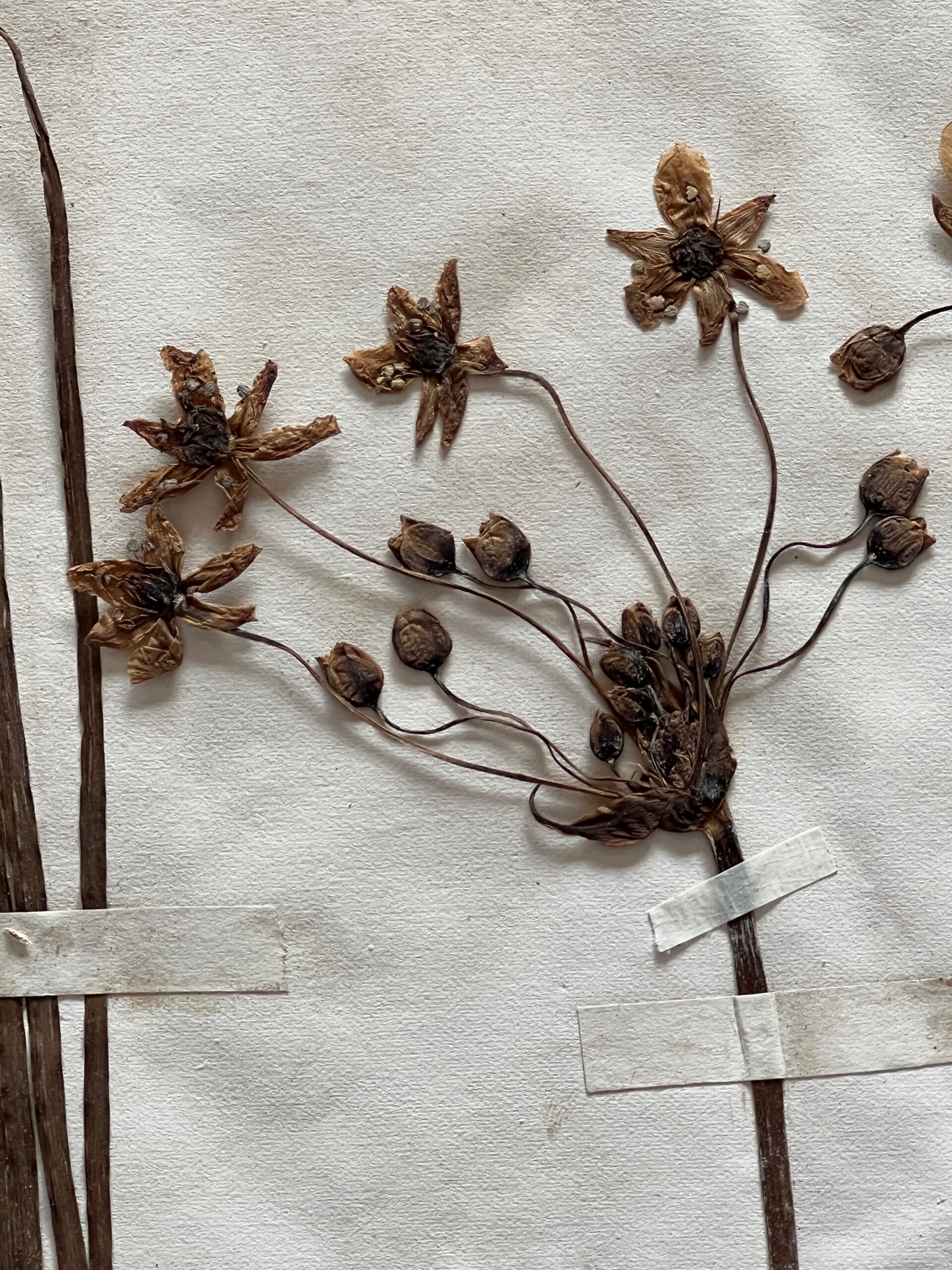
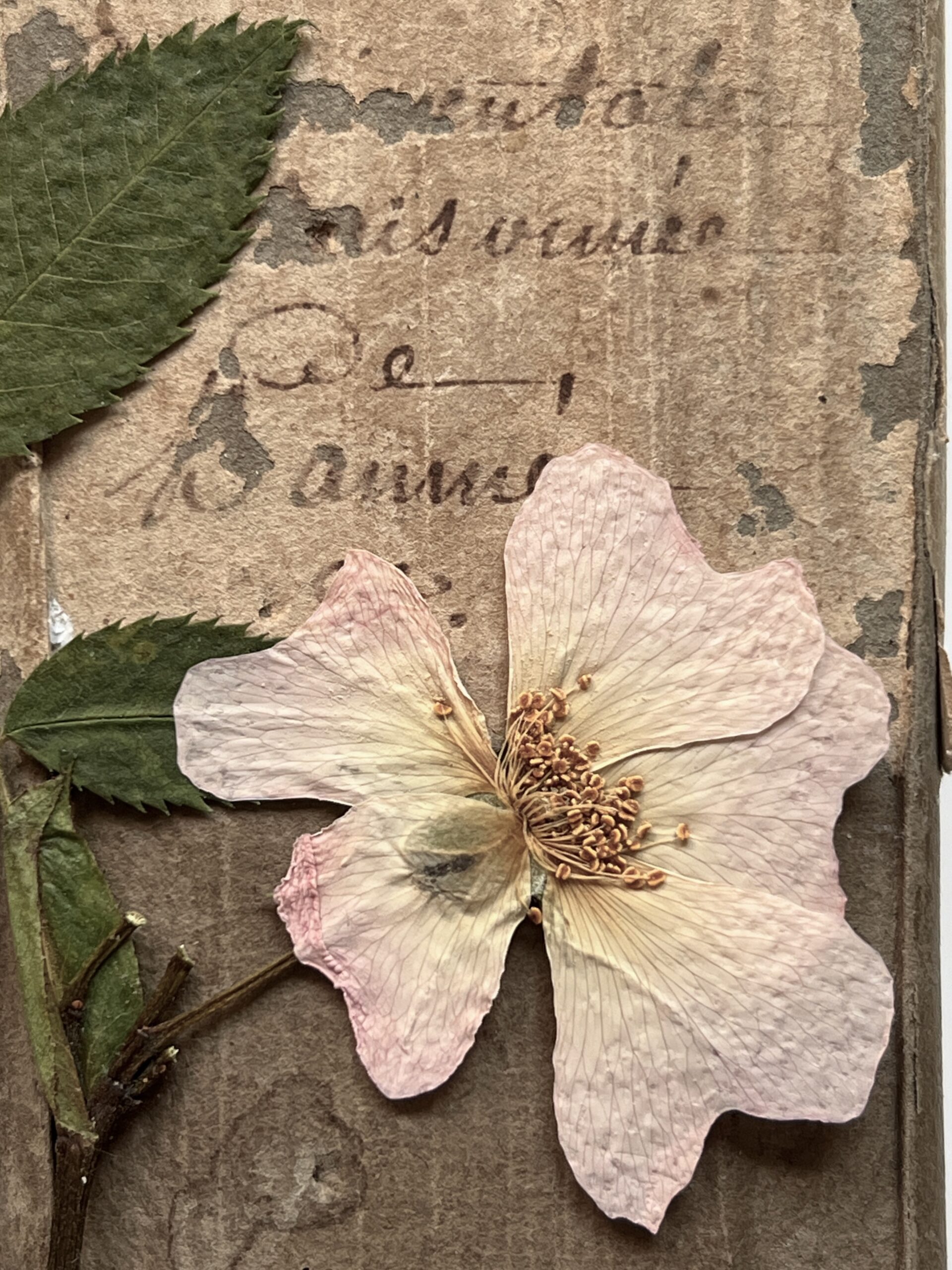
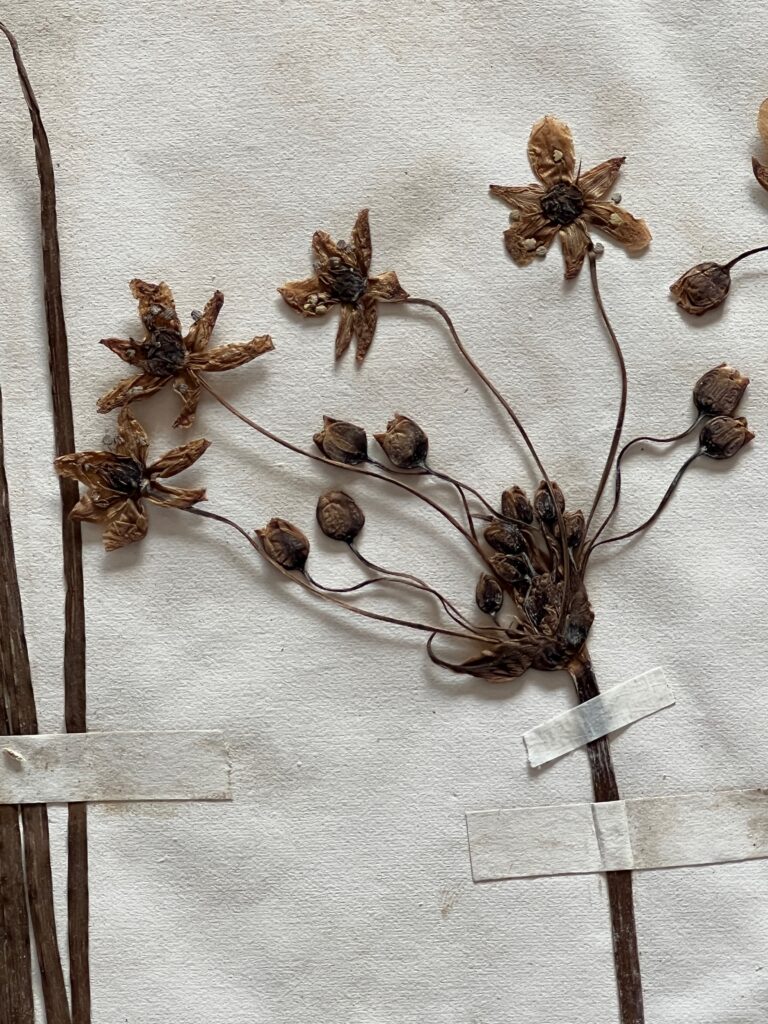
I have been collecting herbarium sheets for over twenty years. On the left is a detail of one of my favourites, Butomus umbellatus or the flowering rush. The flowers were once pink. Now their beauty resides in the faded browns, the dark roots sometimes encrusted with earth. The aim is not to replicate the live plant in stitch: but to capture the shapes and textures of the preserved plant.
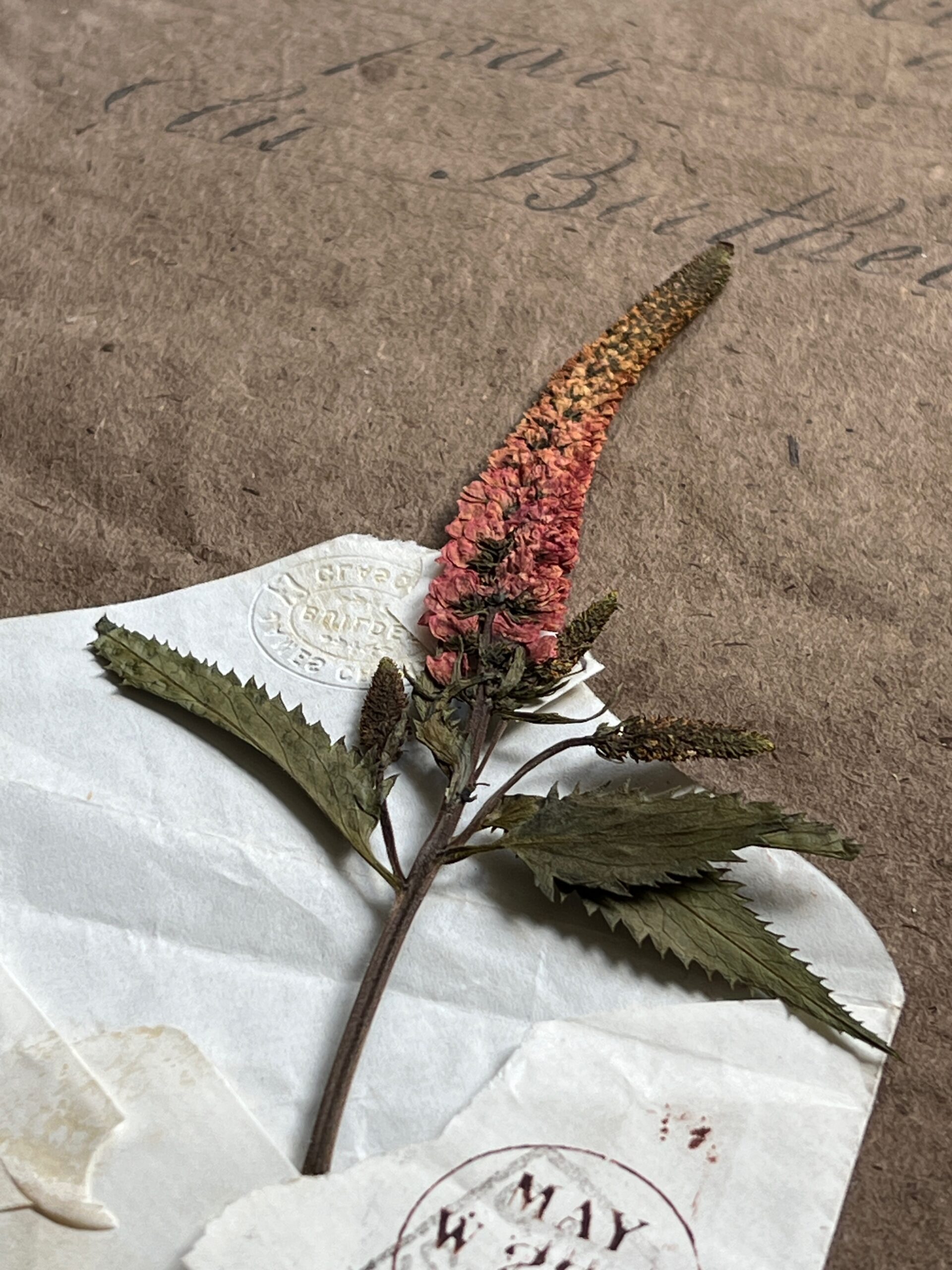
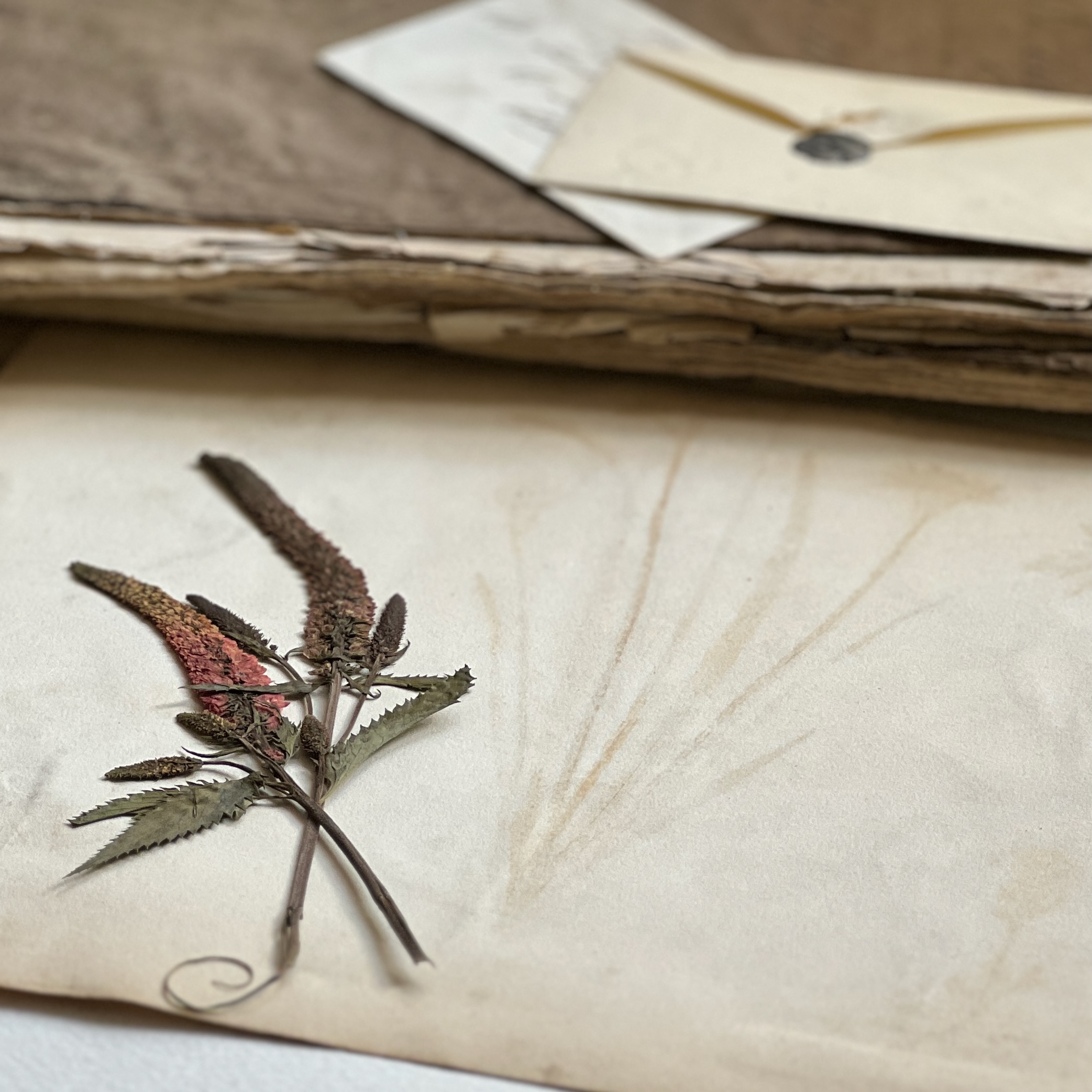
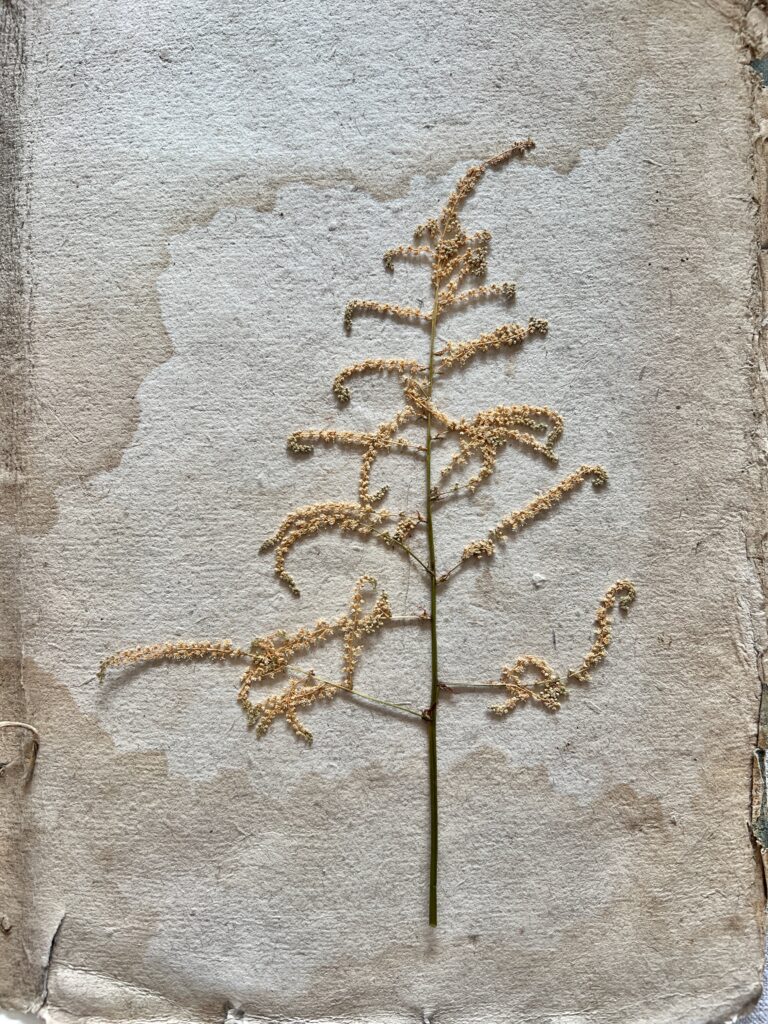
On the right is a spray of astilbe rubra. As its name suggests, it was a deep pinky red when live.
IMG 7068 2

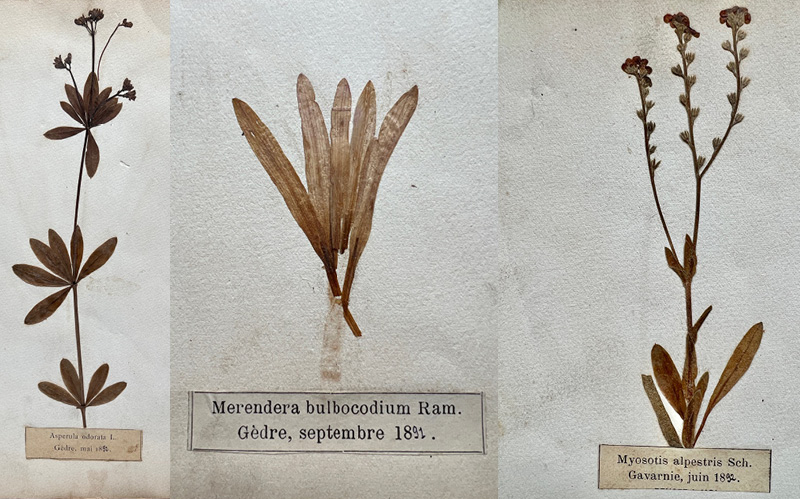
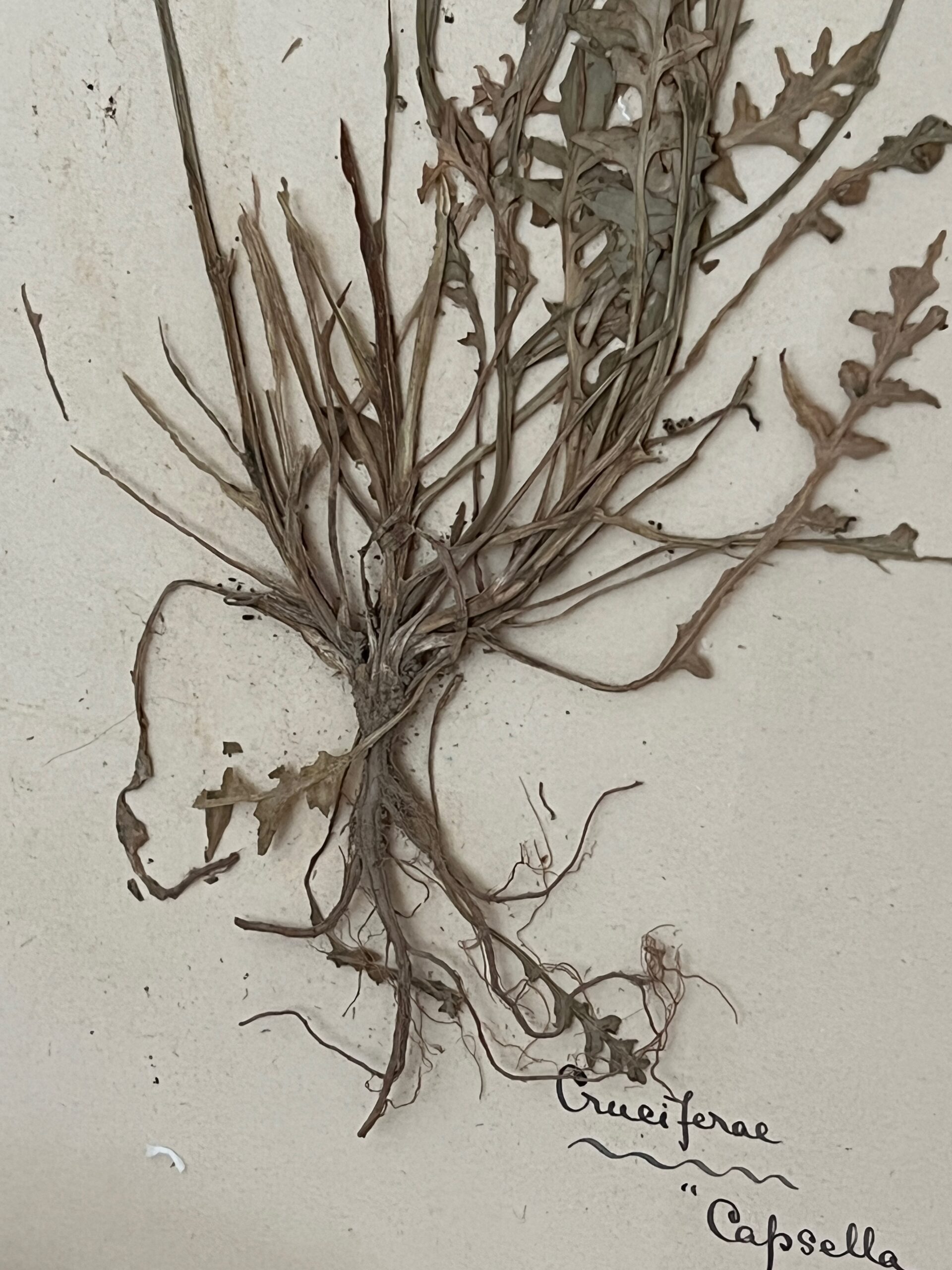
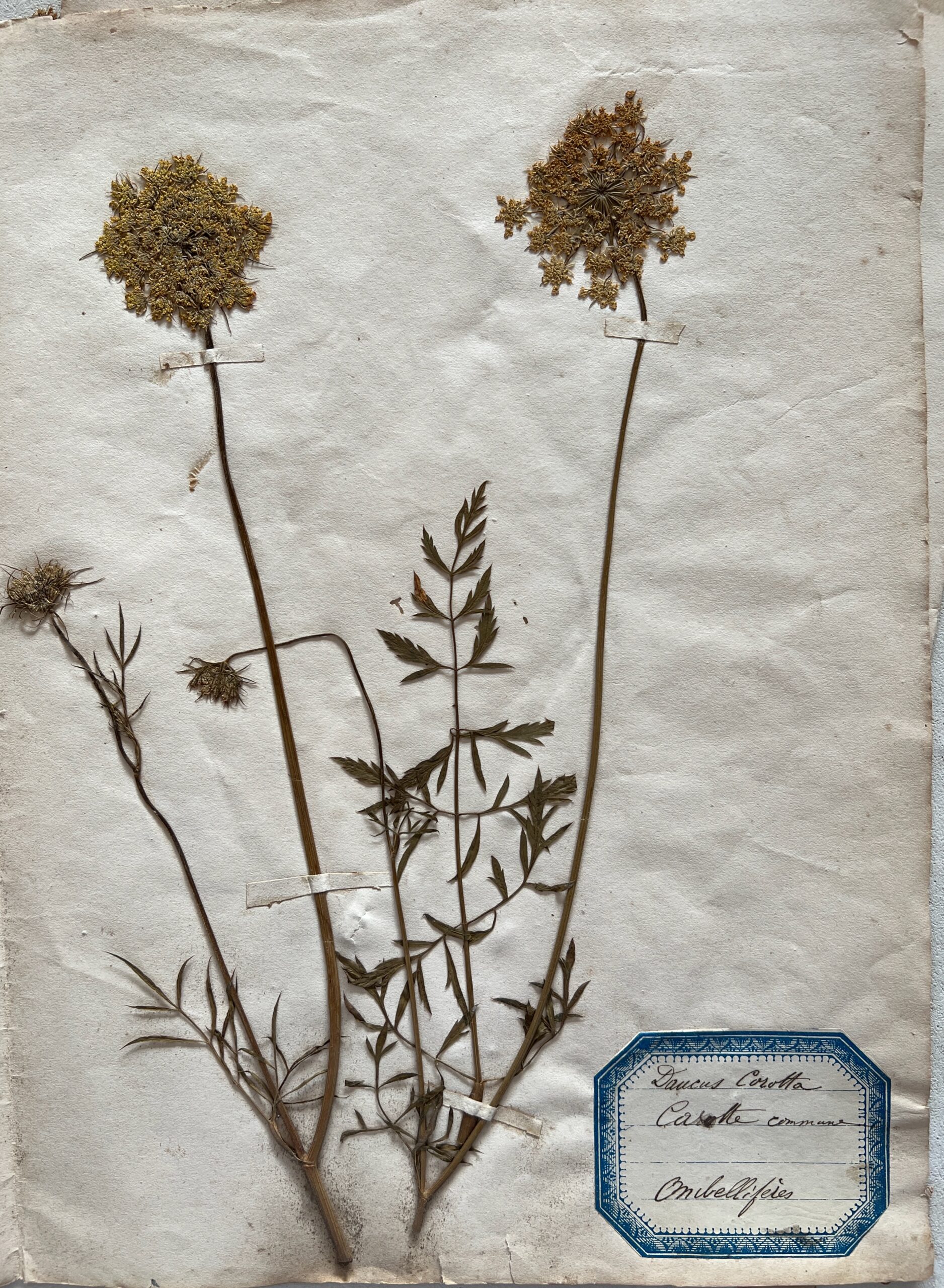
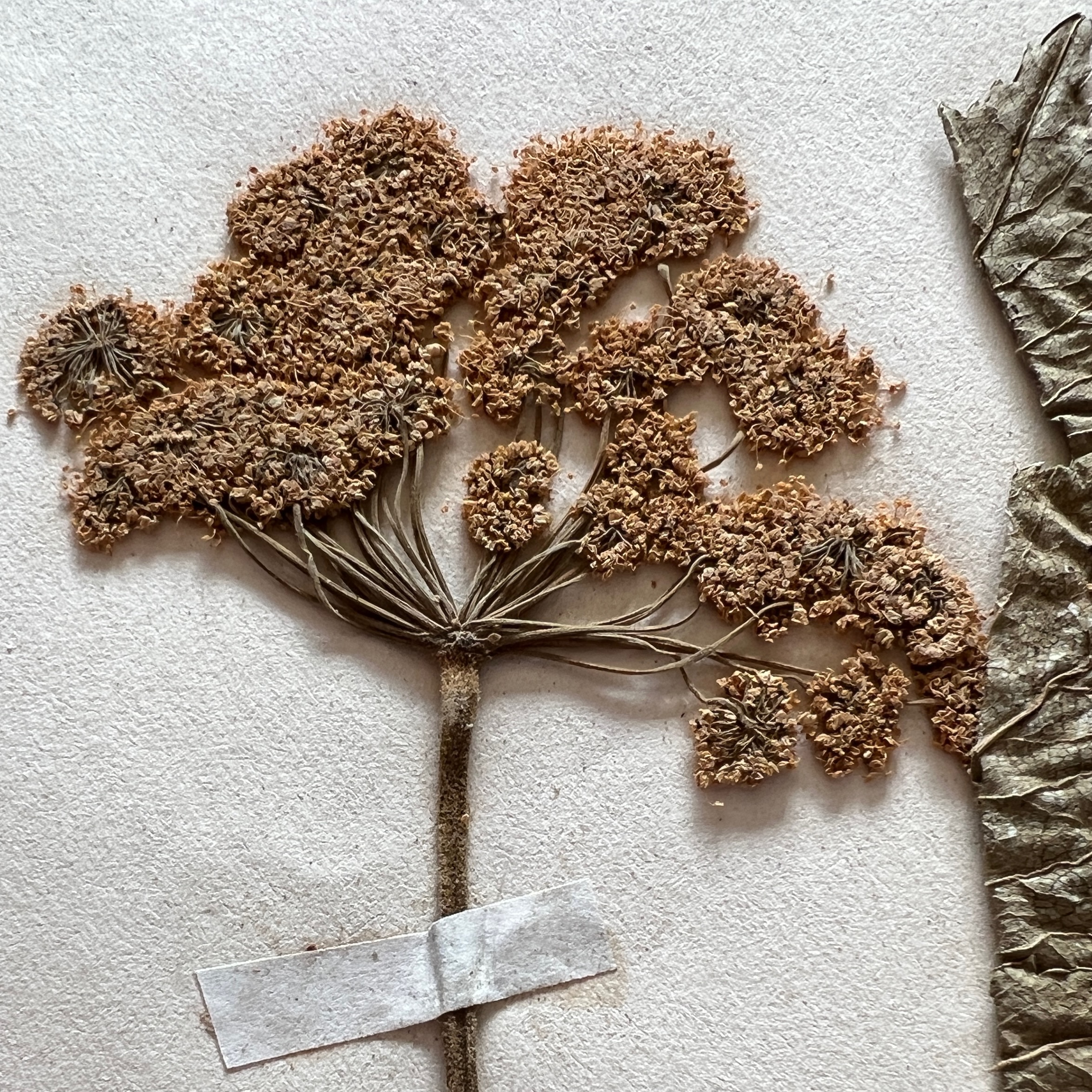
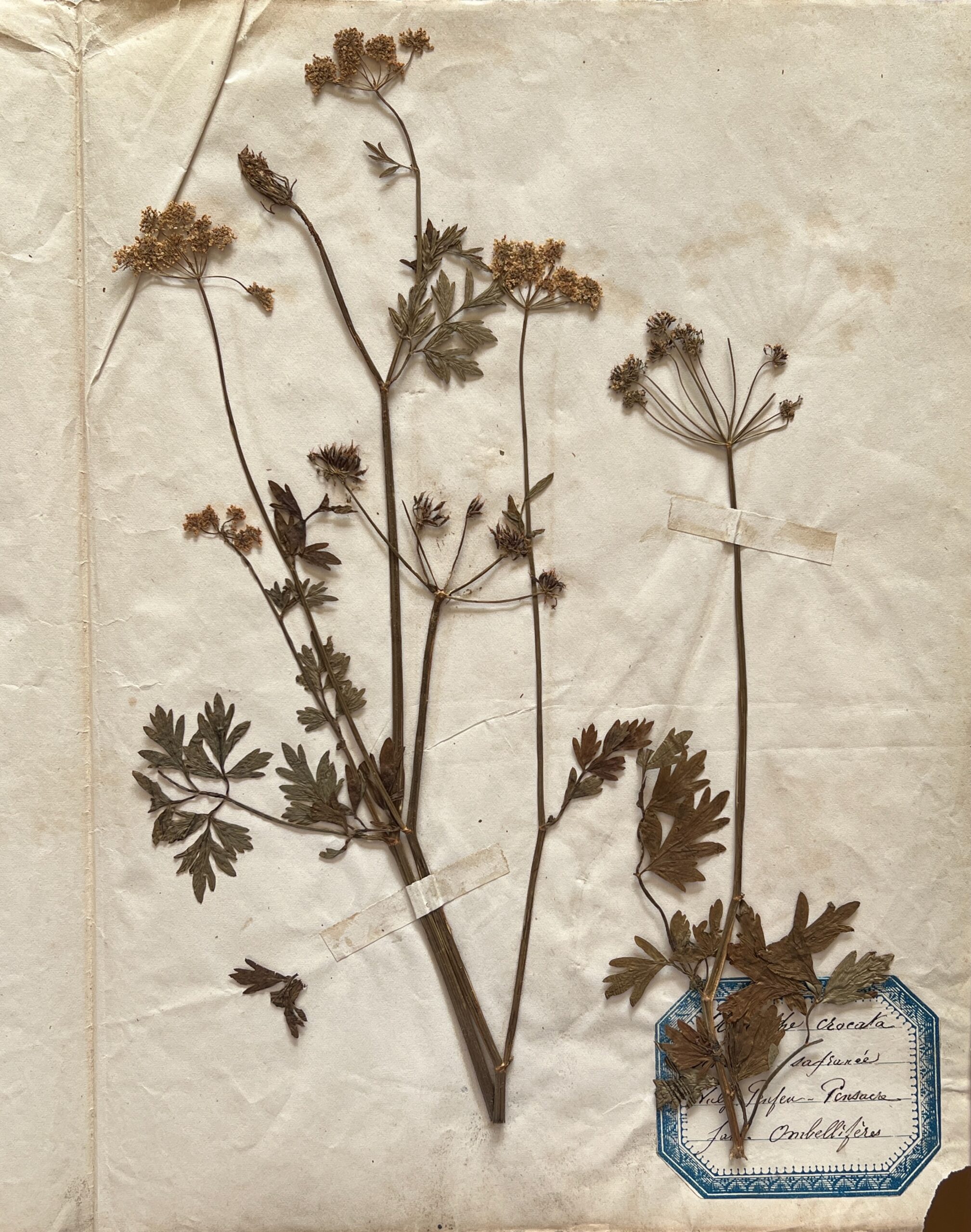
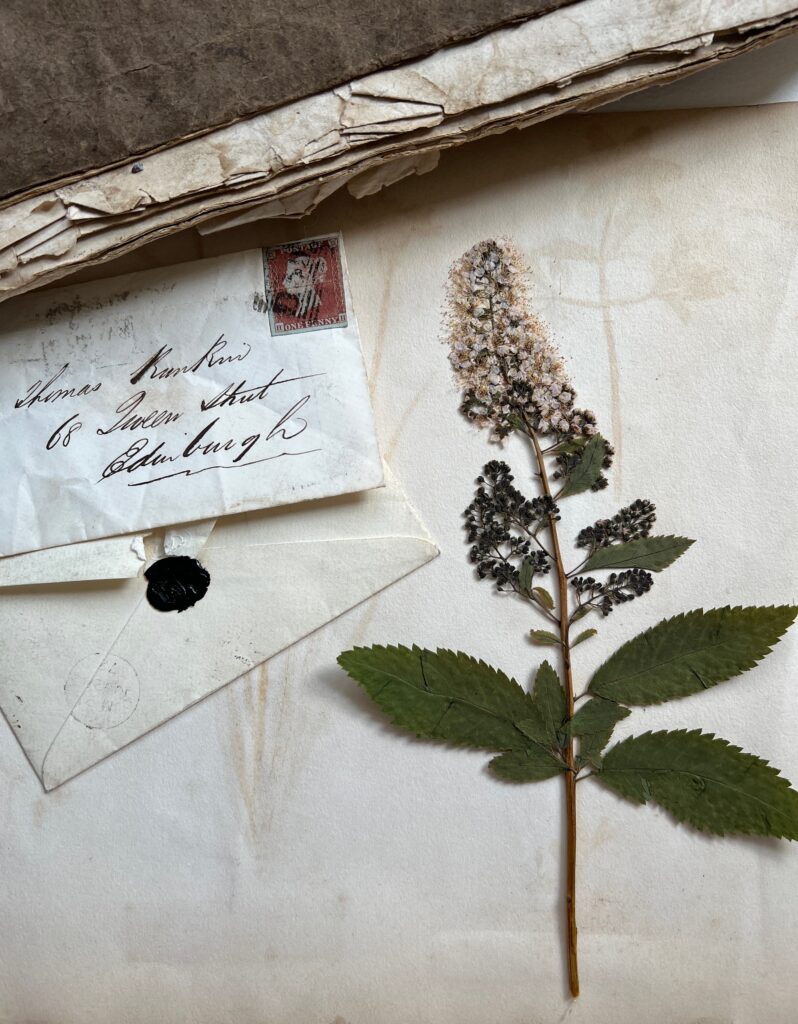
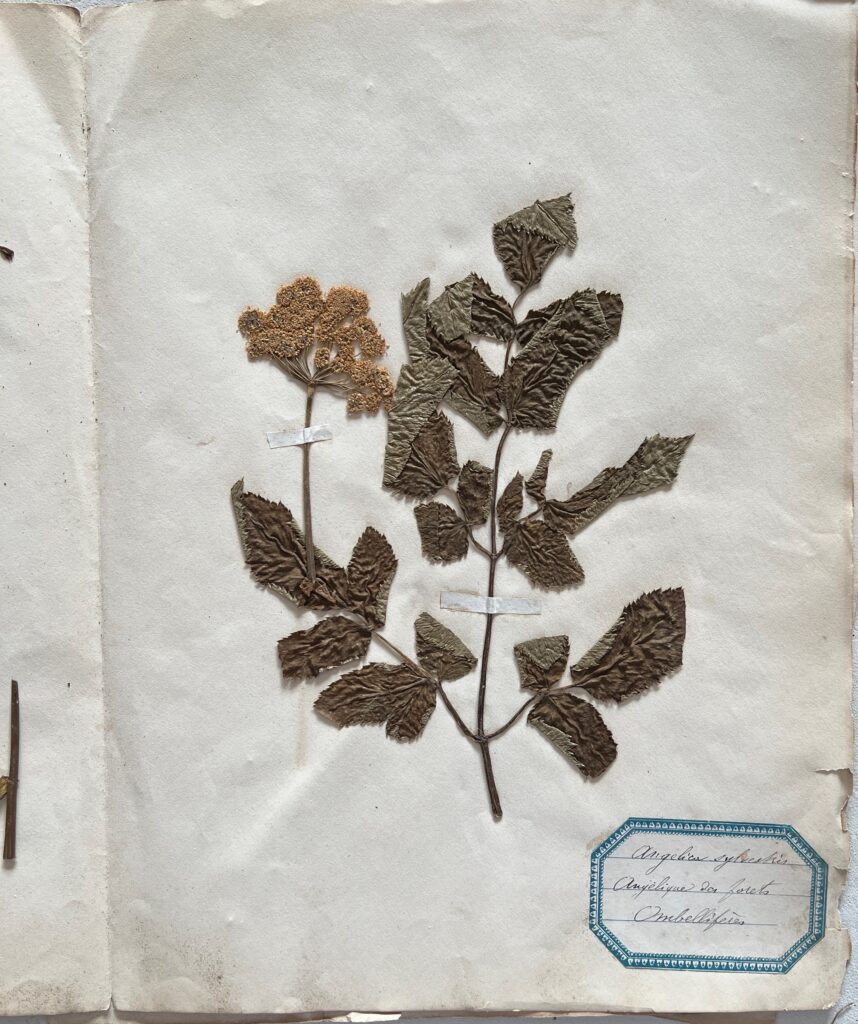
So what is a herbarium, herbier, hortus siccus or dried garden? It is the art of preserving plant matter in dried form, taped onto large sheets of ‘whited paper’ rather than a brown paper which can spoil the plants. It is a practice that has changed little since it began in the early part of the sixteenth century. The labels alone are often miniature works of calligraphic art. Herbarium sheets are beautiful but they are also a valuable scientific resource.
IMG 6896 1

Starting a herbarium

Who hasn’t pressed a flower, either using a flower press or, for sentimental reasons, slipped between the pages of a book? Is there anything more touching than opening a vintage book and finding a papery, faded flower, wondering who preserved it so, and why?

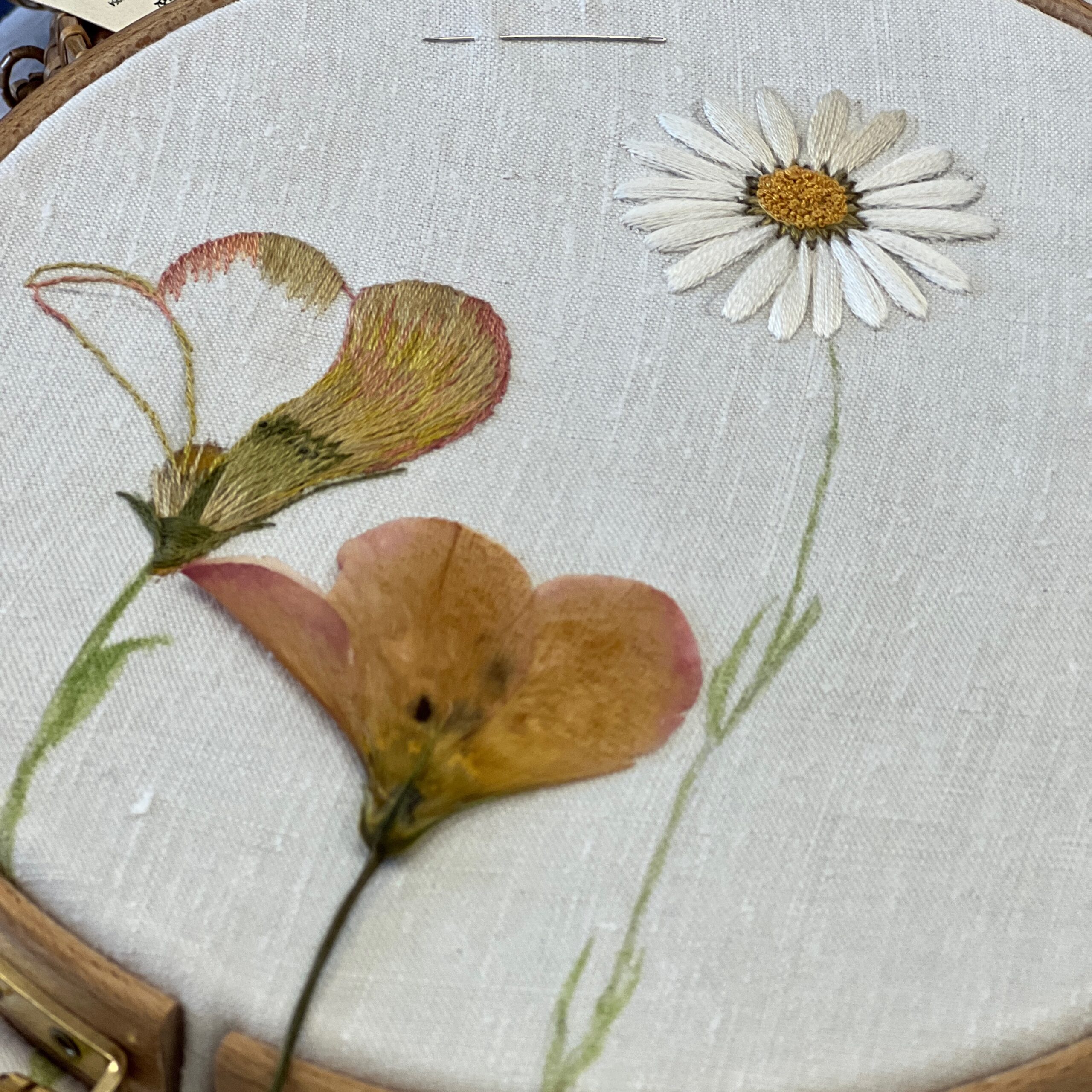
Pressed flowers, grasses and other plant material are inspiring for the embroiderer. Freshly picked, their three-dimensional forms can be hard, perhaps impossible, to capture without, as May Morris suggested, creating a ‘libellous caricature having less resemblance to the real thing than the fearless images with a blunt pencil done by a child, whose drawings are symbols of what his eyes see…’
IMG 7134 1

The snowdrop

snowdrops Page 1 Image 0004

The Snowdrop

‘Many, many welcomes,

February fair maid

Ever as if old time,

Solitary firstling

Coming in the cold time…’

 — Alfred Lord Tennyson

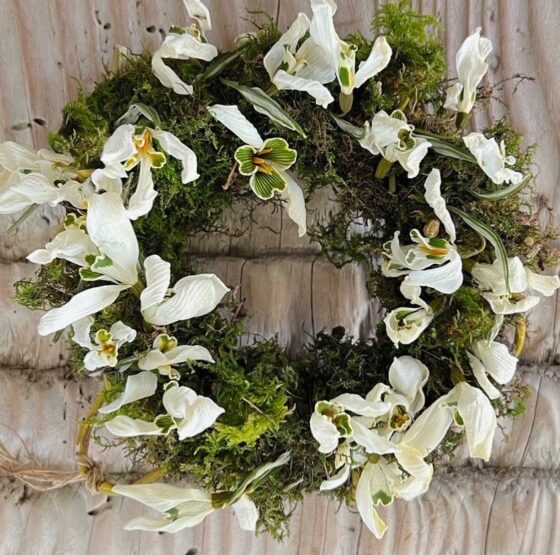
Candlemas flowers, flowers of hope, snow flowers…whether they arrive in a tny clump in the grass or a carpet across a woodland floor, they are always an inspiring sight just as we think we can bear no more of winter. 

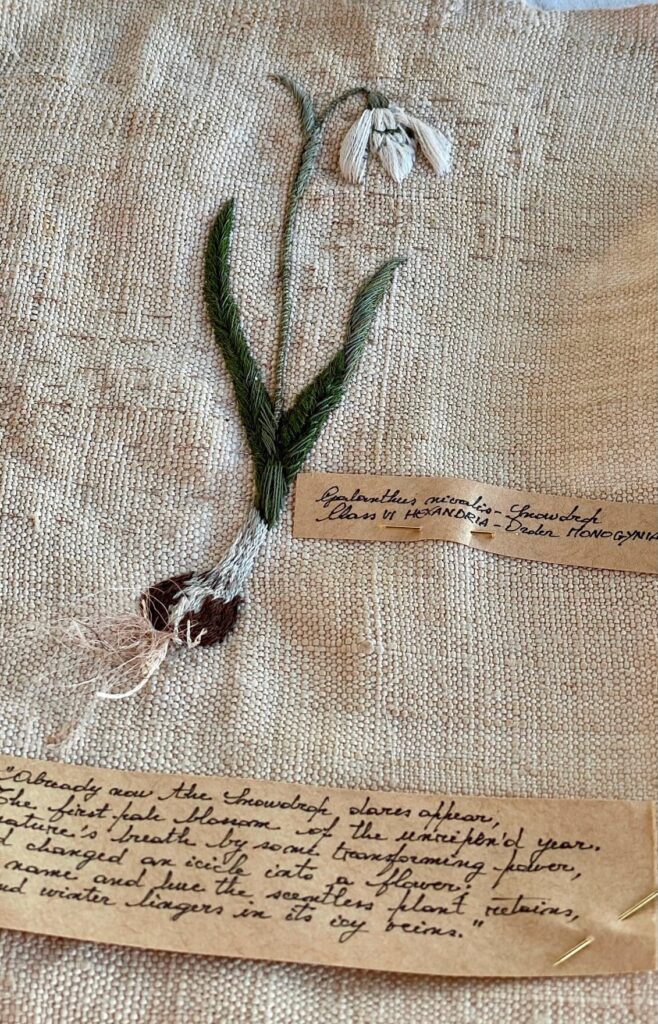
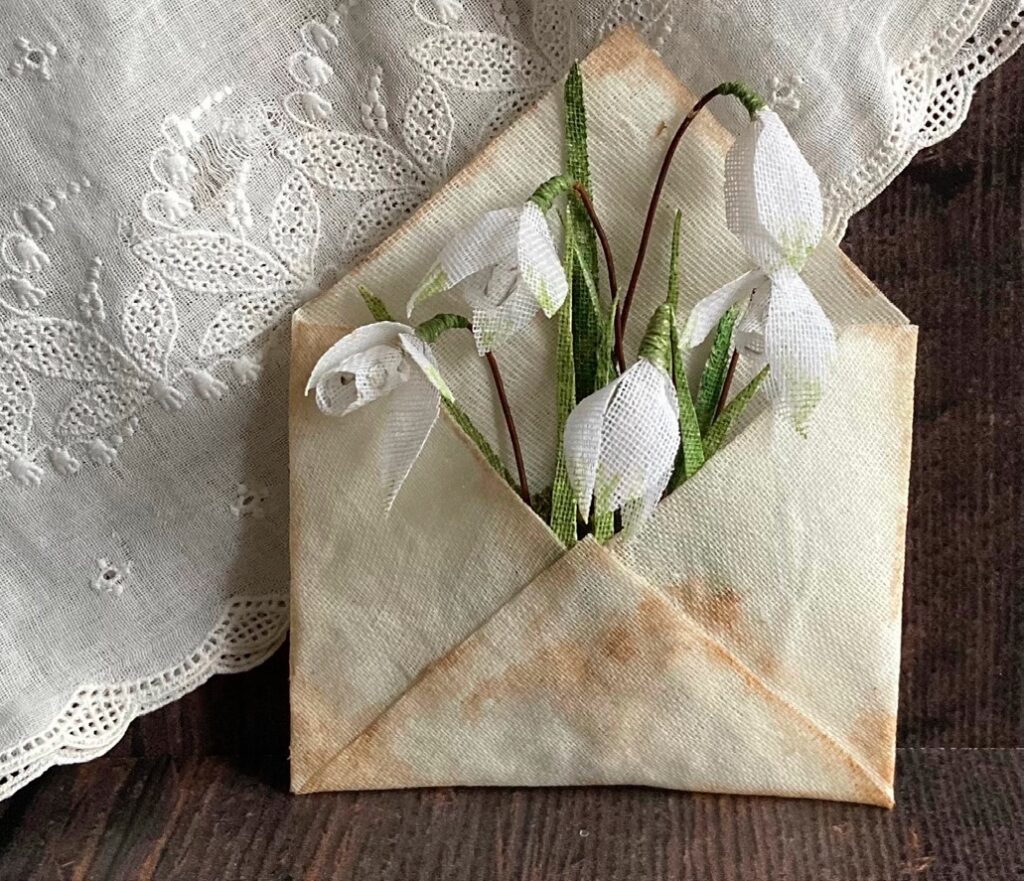
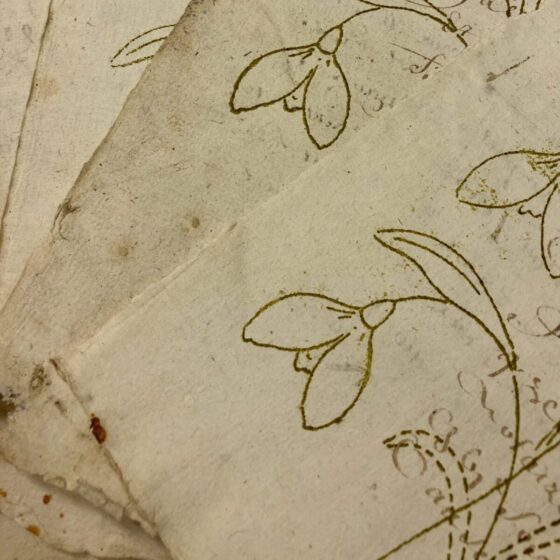
They inspire many different forms of creativity, from the exquisite botanical embroidery of Cristina Rebeccani Coretti, whose work has been displayed in the Library of St Mark’s, in Venice, to the dear envelopes of hand-made flowers made by Debra Thompson

snowdrops Page 1 Image 0003

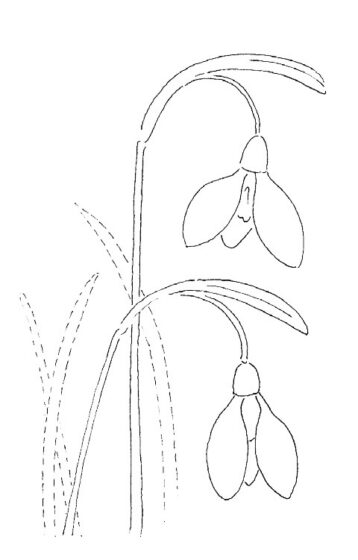
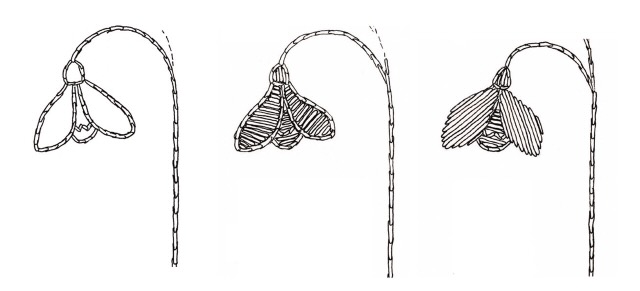
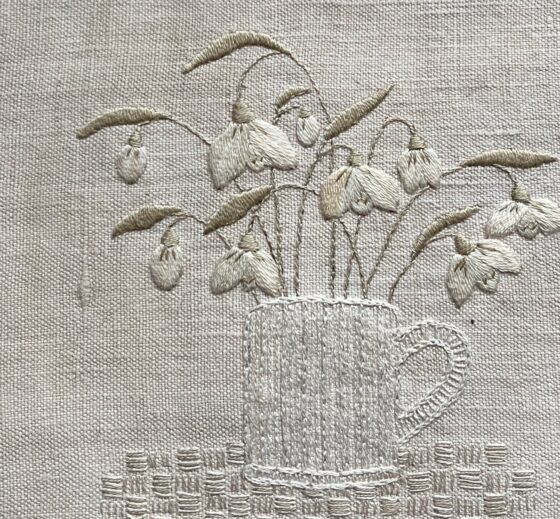
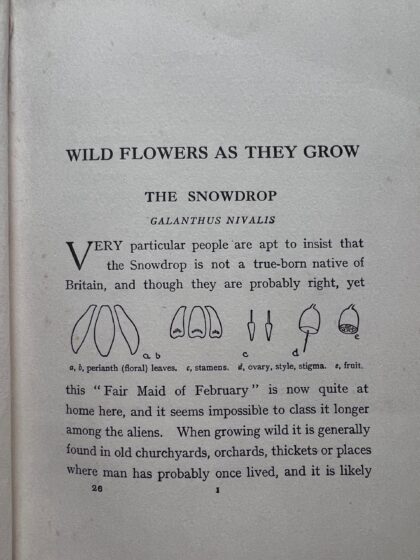
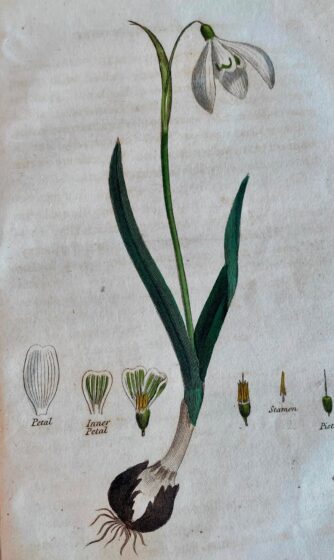
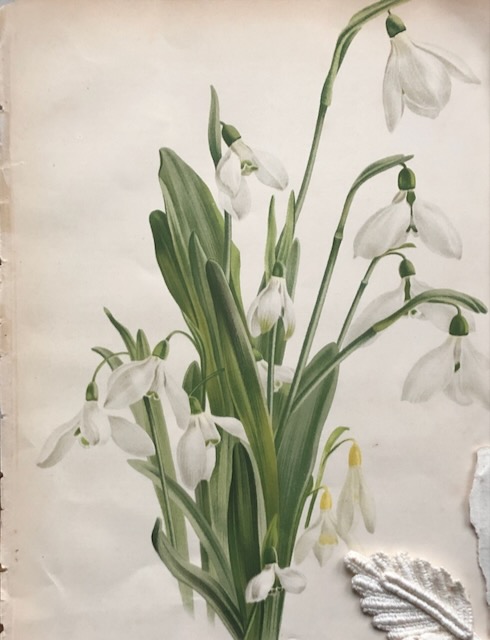
The snowdrop is a good flower with which to practise Satin and Padded Satin stitch, which suits the lovely shapes of the petals. Even if you are not aiming for the look of a botanical embroidery, it is always a good idea, whatever the flower you are embroidering, to examine the real thing in detail. There is of course masses of information online, but I love the vintage wildflower and botany books, especially the series ‘As shown to the children’, which makes things very clear and simple.

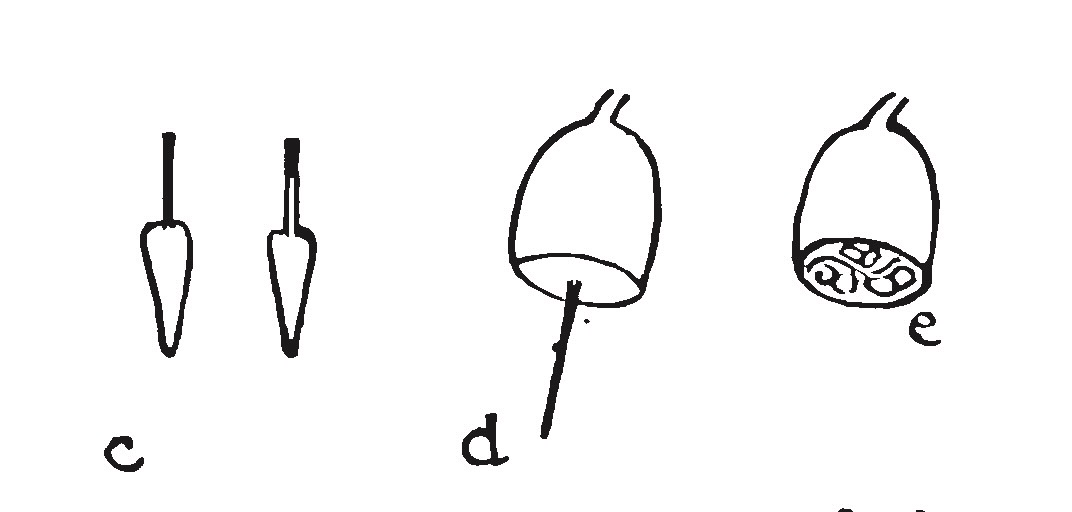
With the snowdrop, the key feature is getting that little nib at the tip of the tepals (these are the outer, white parts of the flower – called tepals in plants where the petals and sepals are effectively indistinguishable, such as in lilies) while keeping their lovely shape: more rounded if the tepals have opened, in which case the little green markings on the inner whorl will show, or are still closed, in which case the green markings are not visible. If one was collecting specimens for an herbarium, you would try to capture them in each stage of opening. When the bud is tight, it is quite slender with a slightly wrinkly appearance. As it nears the point of opening, it plumps up (these are the best fun to stitch). I think they are at their most lovely when the tepals have just separated and are still pointing down at quite a sharp angle, then as the flower ages, they lift away from the inner whorl until they are almost at right angles to the inner whorl. Each snowdrop has two leaves which are long and are not to be confused with the little hood of green from which each flower breaks free. There are no short leaves coming off the stems. If you are stitching a clump or run of snowdrops, it is a nice idea to include them at all stages so they look more natural. There are many different varieties and the snowdrop hunters can give trainspotters a run for the money in wanting to observe and record the many varieties. 

A gallery of snowdrops

 Hover over the images to see captions and click on the images for a larger view.